

Jul
Farewell to a Cargo Icon
The retirement of FedEx’s Boeing 727 fleet in June 2013 marked the conclusion of a significant chapter in the history of cargo aviation. For nearly four decades, the trijet served as a backbone of the express delivery service, playing a crucial role in shaping FedEx’s operations across North America. With its distinctive purple-and-orange livery, the Boeing 727 became synonymous with FedEx, particularly at its Memphis superhub, where the aircraft facilitated the overnight delivery of packages.
Building an Express Delivery Network
FedEx introduced the Boeing 727 into its operations in 1977, leveraging the aircraft’s unique capabilities to build a robust domestic network. The versatility of the 727, initially designed for passenger transport, allowed FedEx to convert many of these aircraft into freighters. Their ability to serve smaller airports and deliver cargo swiftly made them an ideal choice for the burgeoning express delivery market, contributing to FedEx’s rapid expansion and success.
Transitioning to Modern Freighters
Despite its storied history, the Boeing 727 faced challenges as newer aircraft entered the market. The trijet’s three Pratt & Whitney JT8D engines were less fuel-efficient compared to contemporary twin-engine freighters like the Boeing 757 and 767. As operational costs and environmental regulations evolved, FedEx began phasing out the 727 in favor of more efficient models starting in 2007. The final flight of the 727 on June 21, 2013, signaled the end of an era, as the company transitioned to a more modern fleet.

Preserving a Piece of Aviation History
The retirement of the Boeing 727 did not signify the end of its legacy. FedEx took a commendable step by donating many of its retired aircraft to educational institutions, museums, and fire training facilities across the United States. Over 80 former FedEx 727s found new roles as training airframes, ensuring that future generations of aviation technicians could learn on a piece of history.
A Lasting Impact on Aviation Education
Among the institutions that received these aircraft are the Kansas Aviation Museum, Florida Air Museum, and Owens Community College, among others. These donations allow students and aviation enthusiasts to engage with the aircraft firsthand, fostering a deeper appreciation for the engineering and operational aspects of aviation. The Boeing 727 remains an essential part of training programs, providing invaluable hands-on experience for aspiring technicians.
Continuing the Legacy
While the Boeing 727 may no longer fly in FedEx’s fleet, its impact on the aviation industry and express delivery service is undeniable. The aircraft’s design, operational efficiency, and adaptability helped shape the logistics landscape, influencing how goods are transported across the globe. As enthusiasts and professionals reflect on the Boeing 727’s legacy, its contributions to aviation education and preservation ensure that its story will continue to inspire future generations.






This article was prepared by LibelulaFly as an independent aviation-news summary and editorial reinterpretation based on publicly available reporting. Images, when used, are included for editorial context with source attribution. Original source: www.airportspotting.com. Read the original article here: https://www.airportspotting.com/what-happened-to-fedexs-boeing-727-fleet/.
List, promote, or publish aircraft with LibelulaFly.
LibelulaFly.com • Sales@libelulafly.com • +1 305-332-1942

Jun
Rediscovering the Lockheed L-188 Electra
The Lockheed L-188 Electra, a hallmark of mid-20th century aviation, continues to capture the imagination of enthusiasts and historians alike. Known for its distinctive design and powerful turboprop engines, the Electra played a pivotal role in transitioning the aviation industry from piston-powered aircraft to jet propulsion. Although it has not been a mainstay in commercial aviation for decades, several examples of this aircraft can still be seen today, showcasing its enduring legacy.
A Brief History of the Electra
Launched in the late 1950s, the Electra was designed to meet the growing demand for a fast and economical medium-range airliner. With a capacity of around 75 passengers and powered by four Allison turboprop engines, it could cruise at speeds reaching 400 mph. The Electra was the first large turboprop airliner manufactured in the United States, and it found favor with numerous airlines globally, including American Airlines and Varig in Brazil.
Despite its innovative design, the Electra’s service was marred by a series of accidents linked to a phenomenon known as “whirl mode” flutter. Although Lockheed successfully addressed these issues through extensive modifications, the damage to public confidence led many airlines to shift towards jet aircraft, culminating in the end of Electra production in 1961 after just 170 units were built.

Active Electras: Where to Find Them Today
Today, the Lockheed Electra remains a rare sight, with a small number still operational, primarily in specialized roles. Here are five notable locations where aviation enthusiasts can experience this iconic aircraft:
1. Yellowknife, Canada
Buffalo Airways, renowned for its commitment to vintage aircraft, operates a fleet that includes several Electras. Based in Yellowknife, these aircraft are utilized in the challenging northern climate, continuing the Electra’s legacy in a unique operational environment.
2. Keystone Heights, Florida
At MHD Rockland, located in Keystone Heights, retired Electras are stored and maintained as part of a supply operation for the P-3 Orion fleet. This facility serves as a critical resource for parts and maintenance, ensuring the Electra’s design continues to support modern aviation needs.
3. Red Deer, Canada
Air Spray, the largest operator of Electras today, utilizes these aircraft for aerial wildfire suppression across North America. With a fleet of 14 converted Electras, Air Spray’s operations highlight the aircraft’s adaptability and continued relevance in emergency services.

4. Buenos Aires, Argentina
The Museo de la Aviación Naval, located near Buenos Aires, houses three Electras that were previously part of commercial operations. These aircraft, now preserved, offer a glimpse into the Electra’s storied past within the Argentine Navy.
5. Rio de Janeiro, Brazil
The Museu Aeroespacial in Rio de Janeiro features an Electra painted in Varig colors, symbolizing the aircraft’s historical significance in Brazil’s aviation landscape. This preservation serves as a tribute to the Electra’s prominence in South American aviation history.
The Enduring Appeal of the Electra
As aviation technology continues to evolve, the Lockheed L-188 Electra stands as a testament to a transformative era in air travel. With its unique blend of design, performance, and operational versatility, the Electra remains a beloved aircraft among enthusiasts. Whether in active service or on display, the Electra’s legacy endures, inviting current and future generations to appreciate its place in aviation history.


This article was prepared by LibelulaFly as an independent aviation-news summary and editorial reinterpretation based on publicly available reporting. Images, when used, are included for editorial context with source attribution. Original source: www.airportspotting.com. Read the original article here: https://www.airportspotting.com/5-places-you-can-see-a-lockheed-electra/.
List, promote, or publish aircraft with LibelulaFly.
LibelulaFly.com • Sales@libelulafly.com • +1 305-332-1942

May
A Glimpse into Malév Hungarian Airlines’ History
Malév Hungarian Airlines, once a prominent carrier in Eastern Europe, marked its presence in the aviation industry for over six decades. Established in the aftermath of World War II, the airline began as a joint Hungarian-Soviet venture and eventually evolved into a key player in regional and international air travel. Its distinctive blue-and-white livery became synonymous with air travel in Hungary, connecting Budapest to numerous destinations across Europe, the Middle East, and beyond.
Transitioning Through Turbulent Times
Throughout its operations, Malév navigated a landscape of political and economic change, transitioning from a fleet of Soviet-built aircraft to modern Western jets. Notably, the airline’s modernization in the late 20th century included the introduction of Boeing aircraft, which significantly enhanced its operational capabilities. The Boeing 737 family and Boeing 767 models allowed Malév to expand its reach, catering to a growing demand for contemporary air travel.
Challenges and Financial Struggles
Despite its modernization efforts, Malév faced mounting financial pressures. The rise of low-cost carriers in Europe and fluctuating fuel prices strained the airline’s profitability. Repeated attempts at privatization failed to stabilize its financial situation, leading to a complex ownership history that culminated in re-nationalization. The European Commission’s ruling on state aid further exacerbated Malév’s challenges, ultimately resulting in the airline’s abrupt cessation of operations on February 3, 2012.
The Fate of Malév’s Fleet
Following the airline’s closure, the fate of its fleet became a point of interest. Many of Malév’s leased aircraft were quickly reclaimed by their lessors and redistributed to various operators worldwide. However, a number of historic aircraft have found refuge in preservation. Notable among these is the collection at Aeropark Budapest, which houses several significant models, including the Tupolev Tu-154 and the Ilyushin Il-18, both of which are emblematic of Malév’s rich heritage.
Preserving a Legacy
The legacy of Malév extends beyond its operational years, as its preserved aircraft serve as a tribute to the airline’s contribution to aviation history. The collection at Aeropark Budapest, along with other preserved examples across Europe, stands as a testament to the evolution of air travel in Hungary. These aircraft not only represent the technological advancements of their time but also the cultural connection between Hungary and the world.
Reflections on a National Icon
Although Malév ceased operations over a decade ago, its impact on Hungarian aviation and the broader European market is still felt today. The airline’s sudden disappearance paved the way for low-cost carriers, reshaping Budapest Airport into a hub for budget travel. For many, Malév remains a nostalgic symbol of Hungary’s historical ties to global aviation.
As the aviation industry continues to evolve, the story of Malév serves as a reminder of the challenges faced by national carriers in a competitive environment. The preservation of its aircraft ensures that future generations can appreciate the legacy of an airline that once bridged continents and cultures.

May
Decline of a British Aviation Icon
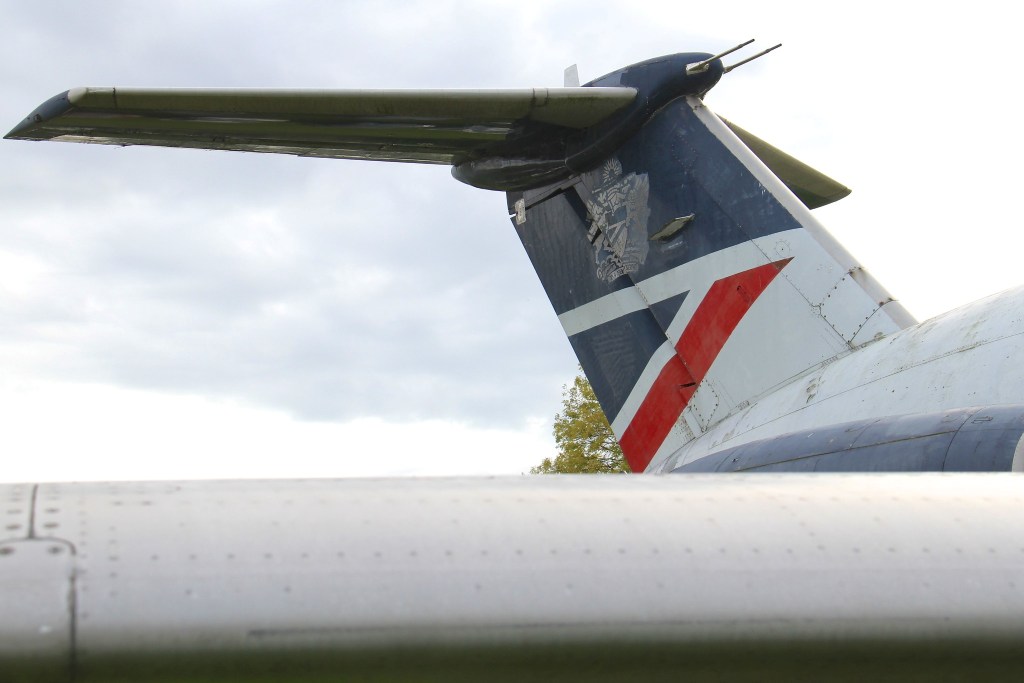
The historic BAC One-Eleven, a hallmark of British aviation from the 1960s through the 1980s, has experienced another significant loss as G-AVMO, a notable example of the aircraft, has been dismantled. Previously showcased at the National Museum of Flight in Scotland, G-AVMO succumbed to years of exposure and deterioration, leading to its removal and subsequent dismantling at Cotswold Airport. This event underscores the ongoing challenges faced in preserving aviation heritage amid changing environmental conditions.
A Legacy of Short-Haul Jet Travel
Developed by the British Aircraft Corporation, the BAC One-Eleven was designed to meet the burgeoning demand for short-haul jet services. Its first flight in 1963 marked the beginning of a successful era, with the aircraft becoming a staple for numerous airlines, including British European Airways and later British Airways. The One-Eleven was celebrated for its operational versatility, allowing it to thrive in various regional settings across Europe.
Challenges in Preservation
The dismantling of G-AVMO raises pressing questions regarding the preservation of historical aircraft. The museum’s decision was driven by the aircraft’s deteriorated state, exacerbated by the UK’s challenging weather conditions. Corrosion and structural damage have rendered many outdoor displays unsustainable, prompting discussions in the aviation community about the future of such significant artifacts.

Remaining Examples and Their Conditions
With G-AVMO’s dismantling, only two complete BAC One-Eleven airframes are now known to exist in the UK. One is housed at the British Airliner Collection in Duxford, while the other is a prototype at Brooklands Museum. Both have benefitted from dedicated preservation efforts, which have helped maintain their structural integrity despite being displayed outdoors. However, the number of complete examples is dwindling, making the need for proactive preservation efforts increasingly urgent.
Reflections on an Era
The BAC One-Eleven’s contribution to aviation history cannot be understated. It played a crucial role in shaping the landscape of regional air travel, offering airlines a reliable and efficient option for short-haul flights. Its distinctive design and operational capabilities left a lasting impact, with its sound and silhouette becoming synonymous with an era of British aviation.
The Future of Aviation Heritage
The fate of G-AVMO serves as a poignant reminder of the challenges faced by aviation museums. As large aircraft become increasingly difficult to maintain, the preservation of aviation history may require innovative solutions and increased funding. Enthusiasts and historians alike are calling for a renewed focus on the protection of these aircraft, not only as technical achievements but as cultural artifacts that represent a significant chapter in Britain’s aviation narrative.
Conclusion: A Call to Action
As the aviation community reflects on the legacy of the BAC One-Eleven, the loss of G-AVMO highlights the urgent need for action in preserving the remaining examples of this iconic aircraft. The memories and experiences associated with the One-Eleven are invaluable, and safeguarding these pieces of history will require collaboration among aviation enthusiasts, museums, and funding bodies. The hope remains that the stories of these aircraft will continue to inspire future generations.






This article was prepared by LibelulaFly as an independent aviation-news summary and editorial reinterpretation based on publicly available reporting. Images, when used, are included for editorial context with source attribution. Original source: www.airportspotting.com. Read the original article here: https://www.airportspotting.com/britains-bac-one-eleven-fleet-dwindles-further-as-scottish-example-broken-up/.
List, promote, or publish aircraft with LibelulaFly.
LibelulaFly.com • Sales@libelulafly.com • +1 305-332-1942